Southeastern Anatolia
Mount Nemrut
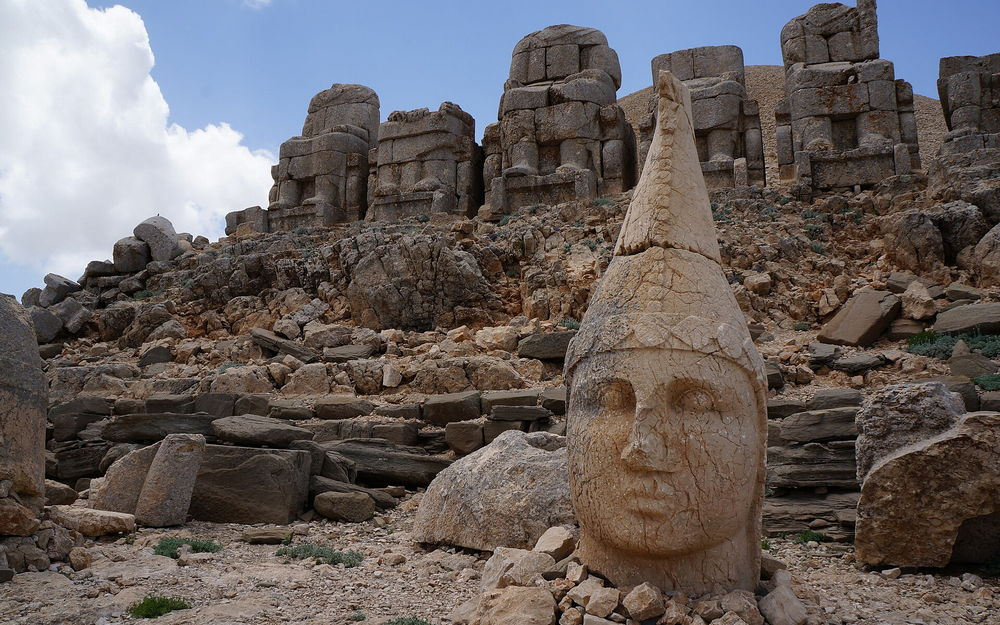
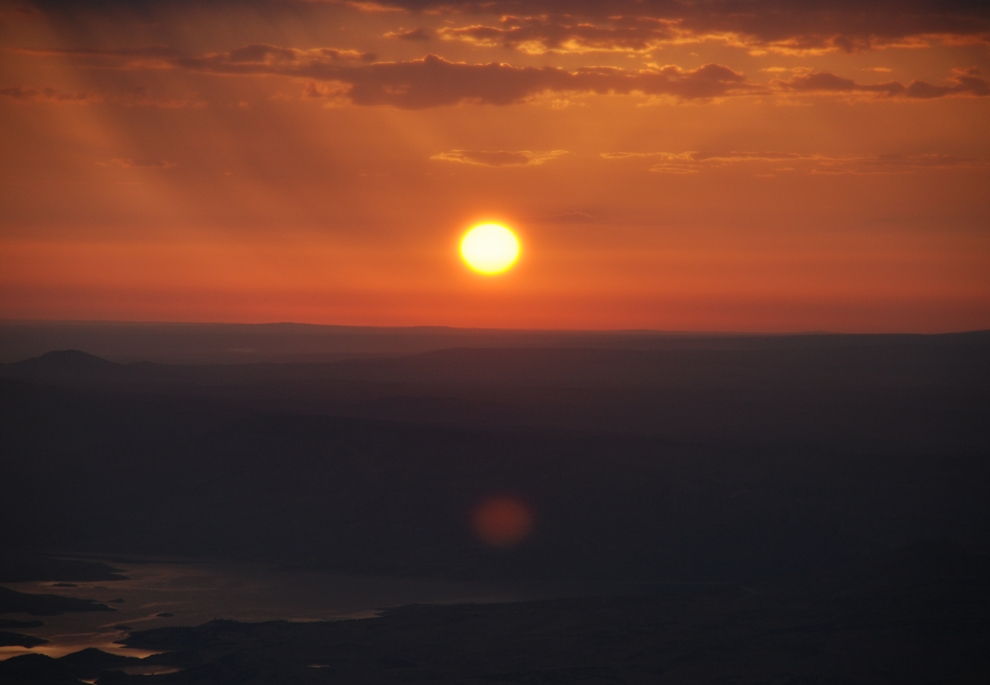
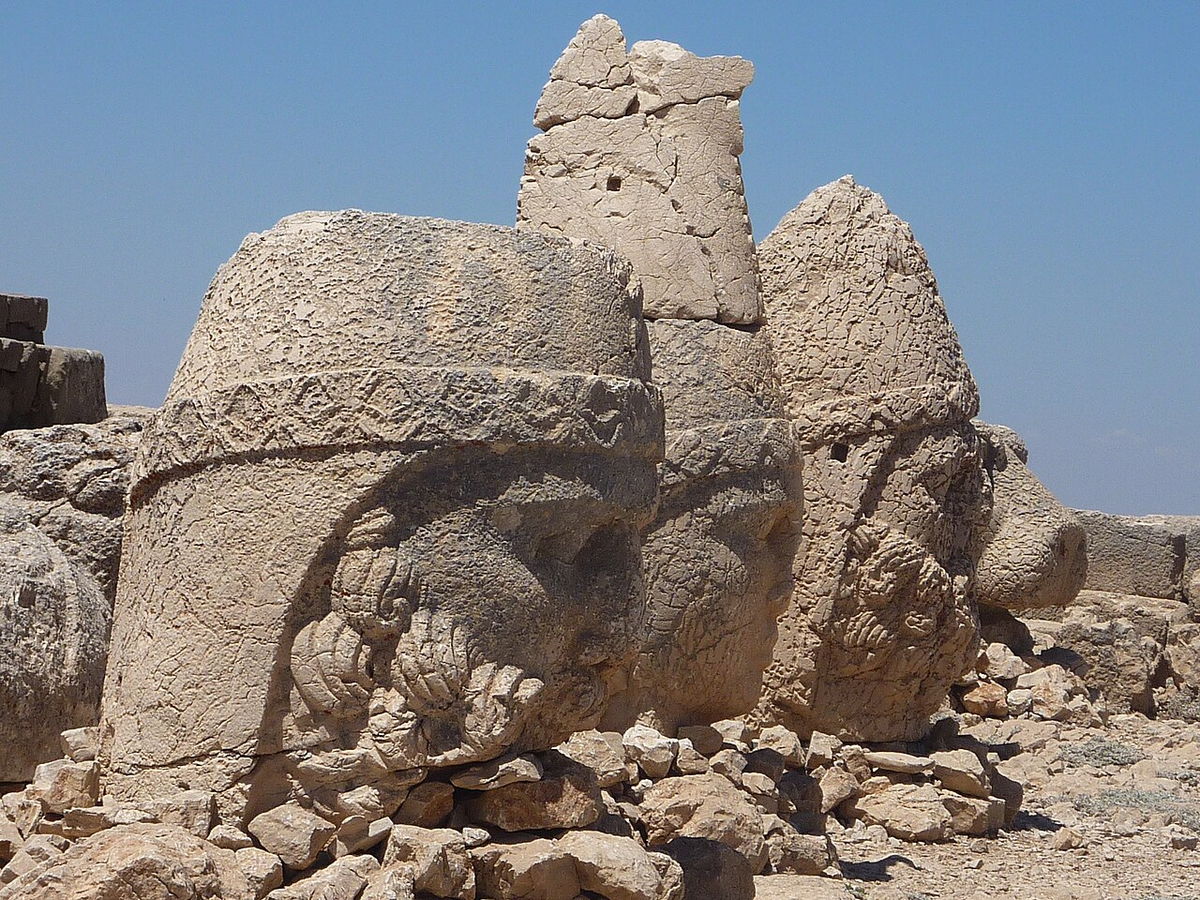
On a 2,134 m summit, a forgotten king of Commagene built his tomb-sanctuary guarded by colossal stone heads of gods and eagles. At sunrise and sunset the toppled statues glow orange above a sea of mountains — pure otherworldliness.
- Where
- Adıyaman, Eastern Taurus
- Best time
- May–Oct (road closed by snow in winter)
- Getting there
- Base yourself in Kahta or the village of Karadut (Adıyaman airport 1.5 h away); the road is open roughly May–October.
- Eat & drink
- Pensions in Karadut cook home-style dinners for sunrise-bound guests; back in Adıyaman, try çiğ köfte and pistachio-heavy desserts.
- Tip
- Go for sunrise, bring warm layers even in August — the summit wind is icy. Base yourself in Kahta or Karadut.
The story
Antiochus I of Commagene ruled a small buffer kingdom between Rome and Persia — and decided to be remembered like neither. On his highest mountain he built a 50-metre burial tumulus of crushed rock, flanked by terraces where he enthroned himself among Zeus, Apollo and Heracles, a self-declared god in a lineage he traced to both Alexander and Darius. Earthquakes have toppled the heads from the nine-metre bodies, and that is the image everyone comes for: colossal stone faces gazing serenely across a sea of mountains.
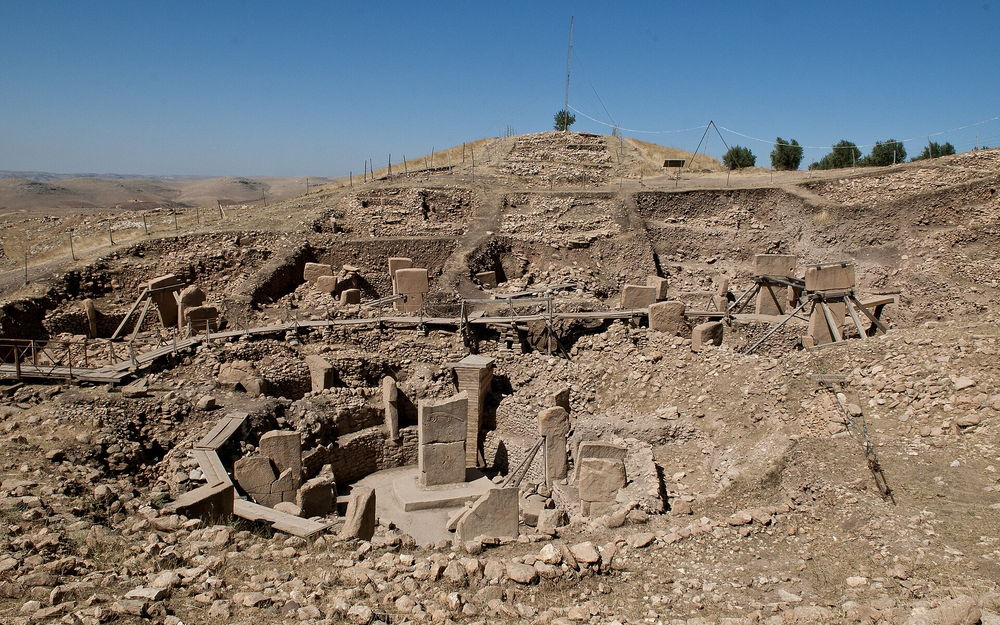
The ritual is the point: drive up in the dark, climb the final 600 metres of path, and watch sunrise ignite the east terrace (or sunset the west). Even in August bring a real jacket — the summit wind bites. His tomb chamber, in the heart of the tumulus, has never been found. On the way down, stop at the Roman bridge of Cendere and the tumulus of Karakuş, and give Şanlıurfa or Mount Nemrut a shared itinerary with Göbekli Tepe.
In pictures